As an Amazon Associate this site earns from qualifying purchases.
Quick Picks
| Product | Best for | Key published specification | Link |
|---|---|---|---|
| Husky Towing 30849 Weight Distribution Hitch | The heaviest trailers covered here | Rated up to 1,200 lb; 12,000 lb gross trailer weight | Check Price on Amazon |
| HUSKY TOWING 31997 800LB Weight Distribution Hitch with Sway Control and 2.32'' Ball | Mid-weight trailers where the ball size is named up front | Listing title for ASIN B0085IJ6E0 states 800LB and a 2.32'' ball | Check Price on Amazon |
| XtremepowerUS 1,000 lb Weight Distribution Hitch with Sway Control | A complete equalizer kit for a 2-inch receiver | 1,000 lb tongue weight capacity; 2-inch shank | Check Price on Amazon |
| CURT 70141 Custom Tow Bar Base Plate Brackets for Dinghy Towing | Flat towing a select GMC or Chevy half-ton | Fits select GMC Sierra and Chevrolet Silverado 1500; bolts to frame | Check Price on Amazon |
| CURT 70130 Custom Tow Bar Base Plate Brackets for Dinghy Towing | Flat towing a select Ford F-150 | Fits select Ford F-150; concealed, factory-look design | Check Price on Amazon |
| WOOCARTY 10.1" - 2 Magnetic Solar Wireless Backup Camera | A no-drill trailer camera with recording | 10.1-inch 1080p monitor; up to four cameras; 9600mAh battery | Check Price on Amazon |
As an Amazon Associate, we earn from qualifying purchases.
Last Updated: September 2026
Here's the thing about upgrading a towing setup: the money is only well spent when it buys a capability you can name before you click purchase. A higher tongue-weight rating. A base plate engineered for one specific truck instead of a universal clamp-on. A camera you can move between rigs without drilling a hole in anything.
Spend up without naming the capability and you have simply bought a heavier box.
This guide covers the four categories that dominate the upgrade conversation — weight distribution hitches with sway control, custom tow bar base plates for flat towing, wireless trailer camera systems, and trailer movement gear like power jacks and dollies. Every factual statement below comes from manufacturer and retailer listing specifications retrieved on September 10, 2026, read closely and compared against each other. Nobody here towed anything to write this page; this website does not do product research, and you should weigh what follows as specification analysis rather than field experience.
What you'll learn
- How to turn a published tongue-weight rating into a hard shopping constraint
- Which fitment numbers decide whether a hitch can actually level your trailer
- Why vehicle-specific base plates and universal tow bars are not interchangeable
- How to read a camera's three different range figures instead of just the biggest one
- Where listing wording conflicts, and what to do about it before you order
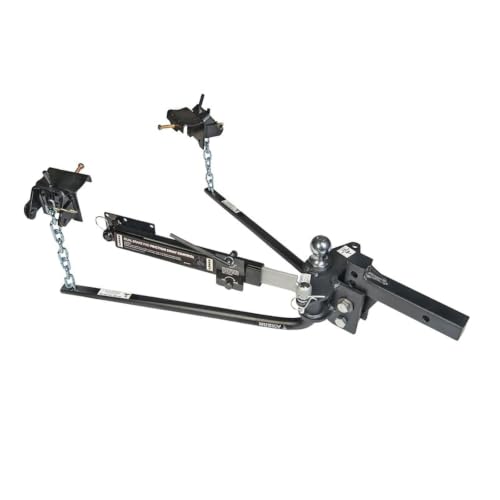
- Weight Distribution Hitch with bolt-together ball mount/shank assembly and
- Black polyester finish resists rust and corrosion. Lift brackets allow safe and easy hitch hook-up. Interchangeable spring bars fit left or right sides of hitch head. Includes
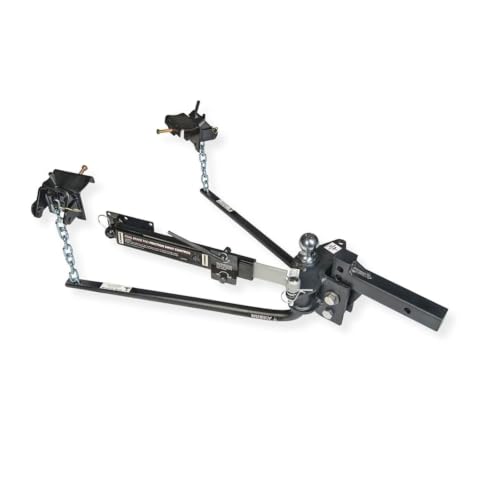
- Package Weight: 98.5 pounds
- The package length is 87.2 centimeters
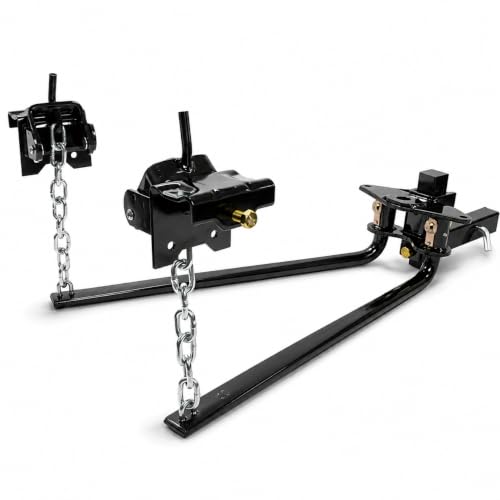
- HEAVY-DUTY WEIGHT DISTRIBUTION SYSTEM – Designed to distribute tongue weight more evenly across the tow vehicle and trailer, helping maintain a more level towing position while
- 1,000 LB TONGUE WEIGHT CAPACITY – Heavy-duty construction is engineered to support up to 1,000 lbs. of tongue weight, making the hitch suitable for towing travel

- CONCEALED DESIGN. This base plate for towing has a hidden design to help maintain an OE, factory look on the vehicle
- SOLID STRENGTH. CURT towing base plates and tow bar brackets are constructed from high-strength steel and welded together with precision for dependable towing strength

- CUSTOM FIT. This tow bar base plate is uniquely engineered to fit select years of the Ford F-150. It bolts onto the frame, providing a reliable connection for flat towing (not
- CONCEALED DESIGN. This base plate for towing has a hidden design to help maintain an OE, factory look on the vehicle

- 【DIY Installation】 Thanks to its strong magnetic base, this solar wireless backup camera system can be effortlessly attached to any magnetic metal surface without drilling or
- 【10 Inch 1080P Monitor】 Experience crisp 1080P clarity on the 10.1-inch large monitor of the WOOCARTY RV
What Counts as Premium RV Towing Equipment?
Premium towing equipment is gear whose published specifications commit the manufacturer to something measurable: a stated tongue-weight rating, a stated adjustment range, a vehicle-specific fitment list, or a stated transmission range. Cheap gear tends to describe benefits. Serious gear publishes numbers you can check against your rig.
That is the practical test to apply while shopping. If a listing tells you the hitch is "heavy duty" but never names a rating, you cannot size it. If a base plate says it fits "most trucks," it is not doing the job a frame-specific bracket does.
Types of RV Towing Equipment Explained
| Category | What it does | Who needs it | Verify before buying |
|---|---|---|---|
| Weight distribution hitch with sway control | Transfers tongue weight forward across the tow vehicle and trailer axles and resists side-to-side movement | Travel trailer owners whose loaded tongue weight is high relative to the tow vehicle | Tongue-weight rating, gross trailer weight rating, shank size, rise/drop range, ball size and whether the ball is in the box |
| Custom tow bar base plate | Bolts to a specific vehicle's frame so a tow bar can be attached for flat towing behind a motorhome | Motorhome owners towing a dinghy vehicle four wheels down | Exact year and model fit, tow bar compatibility, and whether the vehicle manufacturer approves flat towing at all |
| Wireless trailer camera system | Adds a rear or side view on a monitor in the cab, often with recording | Anyone backing a long trailer, or watching traffic behind a rig | Transmission range for your rig length, mounting method, power source, monitor size |
| Power tongue jack / trailer dolly | Raises the tongue or moves an uncoupled trailer without the tow vehicle | Owners who reposition trailers on driveways and in tight sites | Manufacturer's lift or push rating, mounting bolt pattern, power source, manual override |
Each category solves a different problem, and buying up in one does not compensate for skipping another. A 1,200-pound-rated hitch does nothing for you if your trailer is invisible while reversing.
Key Features to Look For, Ranked by Importance
1. A stated capacity rating you can match to your actual load. This is the whole ballgame. Weigh your loaded trailer's tongue weight, then buy a hitch whose published rating covers it with margin, and confirm the tow vehicle, receiver, ball mount and ball each carry their own adequate rating. Every one of those limits applies independently.
2. Sway control that the manufacturer actually describes. Husky's listing describes the 30849 as a weight distribution hitch with a bolt-together ball mount and shank assembly plus sway control, and rates it up to 1,200 pounds with a gross trailer weight of 12,000 pounds. That is a specific claim. The XtremepowerUS 1,000 lb Weight Distribution Hitch with Sway Control, Heavy Duty Trailer Towing Equalizer Kit, 2-Inch Shank for RV & Travel Trailers (ASIN B01NBP7XT8) also names sway control in its listing title and carries a feature bullet headed "IMPROVED SWAY CONTROL & STABILITY," which states that the weight distribution design helps minimize unwanted trailer movement and improve handling on the highway. The listing does not describe the sway-control mechanism itself.
3. Shank and receiver fitment. A hitch that does not physically fit your receiver is scrap metal. XtremepowerUS specifies a heavy-duty 2-inch shank for compatible 2-inch hitch receivers, with multiple adjustment positions for trailer alignment and towing height. Measure your receiver opening and depth first.
4. Adjustment range. Leveling is the point of weight distribution, and adjustment range decides whether you can get there. Husky's listing states 8 inches of total height adjustment, a rise of 5-5/8 inches, a drop of 2-3/8 inches, a 10-inch shank length, and 12-3/4 inches from ball to pin hole for the 30849. Compare those against your receiver height and coupler height rather than guessing.
5. Corrosion protection. Towing hardware lives outside in salt and grit. Husky's listing also states a black polyester finish that resists rust and corrosion, lift brackets for hook-up, interchangeable spring bars that fit either side of the hitch head, and included assembly hardware and chains. CURT describes a concealed design intended to preserve the factory look, high-strength steel welded construction, and a dual-coated A-coat plus black powder coat finish on its base plates. Neither claim is a corrosion warranty, but both tell you the maker thought about exposure.
6. What is actually in the box. XtremepowerUS states that the kit includes spring bars, mounting brackets, chains, adjustment hardware and hitch components, in steel construction built for repeated towing use. Kit completeness changes the real cost of the purchase more than most spec-sheet lines do.
7. Vehicle-specific engineering for flat towing. CURT states the 70141 is engineered to fit select years of the GMC Sierra and Chevrolet Silverado 1500, bolts onto the frame, and is not compatible with a universal tow bar. That last clause is the one people miss.
8. Range figures that match your rig, not the headline number. More on that below.
Common Mistakes to Avoid
- Buying a hitch on gross trailer weight alone. Tongue weight is the number the spring bars are rated against. Weigh it.
- Assuming the trailer ball is included. Read every bullet — and when they disagree, ask the seller before ordering.
- Ignoring ball shank diameter. Husky's listing specifies a 1-1/4 inch hole on the head assembly for the 30849, which it says requires a trailer ball with a 1-1/4 inch shank. Buy the wrong shank and nothing bolts up.
- Treating shipping weight as installed weight. A package figure describes the carton on a truck, not the assembly on your bumper.
- Pairing a universal tow bar with a vehicle-specific base plate. CURT's listings for both base plates here explicitly rule that out.
- Skipping the vehicle owner's manual on flat towing. A base plate's strength claim says nothing about whether your drivetrain tolerates being towed four wheels down. That approval comes from the vehicle manufacturer.
- Reading a camera's maximum unobstructed range as its working range. They are different numbers on the same spec sheet.
- Forgetting supplemental braking and lighting. A base plate purchase is one line item in a flat-tow setup, not the whole setup.
Budget Considerations: What Actually Justifies Spending Up
Forget price ordering for a moment and judge candidates on four things.
Rating headroom. Buying a hitch that sits barely above your current tongue weight leaves no room for the generator, the extra battery, or the full fresh-water tank you will eventually add.
Installation cost avoided. A magnetic, wireless camera avoids a wiring job. WOOCARTY says its camera mounts on a magnetic base with no drilling or wiring, and that it can be detached and reinstalled on a different vehicle. If you own two trailers, that portability is real money saved twice.
Fitment specificity. A frame-specific base plate costs more to engineer than a universal bracket, and that engineering is the product.
Completeness. A kit that ships with spring bars, brackets, chains and hardware asks less of your parts budget than one that leaves you sourcing pieces.
Before ordering anything structural, it is worth searching the brand and model on the Consumer Product Safety Commission's recall database, which publishes recall notices for consumer products. If a seller misrepresents what shipped, USA.gov's consumer protection hub explains how to file a complaint.
Our Top Recommendations
Husky Towing 30849 Weight Distribution Hitch — Best for the highest stated tongue-weight rating among the hitches covered here
Husky's listing describes the 30849 as a weight distribution hitch with a bolt-together ball mount and shank assembly plus sway control, and rates it up to 1,200 pounds with a gross trailer weight of 12,000 pounds. If your loaded tongue weight crowds the ceiling of a 1,000-pound bar set, that headroom is the specific thing you are paying for.
The fitment detail is unusually explicit. The listing states 8 inches of total height adjustment, a rise of 5-5/8 inches, a drop of 2-3/8 inches, a 10-inch shank length, and 12-3/4 inches from ball to pin hole. Those figures let you check leveling feasibility on paper instead of discovering it in a campground driveway.
One wrinkle matters. One bullet says a 2-5/16 inch trailer ball and sway control are included, while another bullet on the same listing says balls are not included. We are not going to pick a side for you: confirm with Husky or the seller what ships in your specific carton before ordering, because the answer changes what else you need to buy.
Strengths
- Highest published tongue-weight rating of the hitches in this guide
- 8 inches of stated total height adjustment for leveling
- Black polyester finish that the listing says resists rust and corrosion
- Interchangeable spring bars that fit either side of the hitch head; assembly hardware and chains included
- Listing wording conflicts on whether a trailer ball is included
- Requires a trailer ball with a 1-1/4 inch shank to match the head assembly
- The 10-inch shank length needs to suit your receiver before you order
HUSKY TOWING 31997 800LB Weight Distribution Hitch with Sway Control and 2.32'' Ball — Best for mid-weight trailers where the ball size is named up front
The listing title identifies the 31997 as an 800 lb weight distribution hitch with sway control and a 2.32-inch ball. For an owner whose loaded tongue weight sits comfortably below that figure, an 800-pound rating is not a downgrade — it is a correctly sized purchase, and oversizing spring bars has its own handling consequences.
Be aware of what the listing does and does not spell out. The supplied feature bullets for this model cover packaging only: a package weight of 98.5 pounds and package dimensions of 87.2 centimeters long, 35.4 centimeters wide and 22.8 centimeters high. Shank length, rise and drop, and gross trailer weight are not stated in that listing information, so ask the seller or check Husky's own documentation before assuming fitment.
One reasonable inference: 2-5/16 inches expressed as a decimal is 2.3125, so the title's 2.32-inch figure appears to describe that common coupler size — but confirm it against your coupler's stamped rating rather than treating our arithmetic as authorization.
Strengths
- Rating and ball size are both named in the listing title
- Sway control is identified as part of the package
- The supplied listing bullets describe packaging rather than towing specifications
- A 98.5-pound package is a shipping figure, not installed weight; plan for help handling the carton
XtremepowerUS 1,000 lb Weight Distribution Hitch with Sway Control, Heavy Duty Trailer Towing Equalizer Kit, 2-Inch Shank for RV & Travel Trailers — Best for a complete equalizer kit on a 2-inch receiver
Xtremepower US states a 1,000 lb tongue weight capacity for this kit and describes it as suitable for travel trailers, campers, utility trailers and other compatible trailer applications. That rating sits between the two Husky models here, which makes it the middle option on paper for owners whose tongue weight lands in that band.
Completeness is the argument for it. The listing states that the kit includes spring bars, mounting brackets, chains, adjustment hardware and hitch components, in steel construction built for repeated towing use. It also specifies a heavy-duty 2-inch shank for compatible 2-inch hitch receivers, with multiple adjustment positions for trailer alignment and towing height.
Read the sway language carefully. The listing for the XtremepowerUS 1,000 lb Weight Distribution Hitch with Sway Control, Heavy Duty Trailer Towing Equalizer Kit, 2-Inch Shank for RV & Travel Trailers (ASIN B01NBP7XT8) names sway control in its title and includes a bullet headed "IMPROVED SWAY CONTROL & STABILITY," stating that the weight distribution design helps minimize unwanted trailer movement and improve handling on the highway. The listing does not describe the sway-control mechanism itself.
Strengths
- 1,000 lb stated tongue weight capacity
- Multiple adjustment positions on a 2-inch shank
- Kit contents are itemized in the listing
- The listing does not state a gross trailer weight rating or a numeric rise and drop range
- The listing names sway control but does not describe the sway-control mechanism
CURT 70141 Custom Tow Bar Base Plate Brackets for Dinghy Towing — Best for flat towing a select GMC Sierra or Chevrolet Silverado 1500
Flat towing is the one area where "universal" is genuinely the wrong answer. CURT states the 70141 is engineered to fit select years of the GMC Sierra and Chevrolet Silverado 1500, bolts onto the frame, and is not compatible with a universal tow bar. That single sentence should drive your whole purchase order: base plate, matching tow bar, wiring and supplemental braking all have to agree.
CURT describes a concealed design intended to preserve the factory look, high-strength steel welded construction, and a dual-coated A-coat plus black powder coat finish. CURT says the baseplate is physically tested to the vehicle's gross vehicle weight rating for dinghy towing — that is the manufacturer's own testing claim, not independent verification, and it describes the bracket's strength rather than approval of your specific towing setup.
Strengths
- Frame-mounted, vehicle-specific engineering rather than a universal clamp
- Concealed design that CURT says maintains the OE appearance
- Dual-coat finish aimed at outdoor exposure
- Fits only select model years — verify yours against CURT's fitment listing
- Not compatible with a universal tow bar
- The listing does not state that a tow bar, wiring harness or braking system is included
CURT 70130 Custom Tow Bar Base Plate Brackets for Dinghy Towing — Best for flat towing a select Ford F-150
The 70130 carries the same construction claims from CURT — high-strength steel welded together, a concealed design, and a dual A-coat and black powder coat finish — but is engineered for select years of the Ford F-150 and is likewise not compatible with a universal tow bar. Same engineering philosophy, different frame.
CURT also states this baseplate is physically tested to the gross vehicle weight rating. Treat that as a manufacturer claim about bracket strength; it says nothing about your motorhome's towing capacity, which has its own separate limit you must respect.
Strengths
- F-150-specific frame mounting
- Finish package aimed at road spray and weather
- Hidden design that CURT says keeps the factory front-end look
- Fits select years only; confirm your exact model year
- Requires a compatible non-universal tow bar
- Supplemental braking and lighting are separate purchases not described in this listing
If flat towing is new to you, start with our flat towing setup guide before ordering brackets.
WOOCARTY 10.1" - 2 Magnetic Solar Wireless Backup Camera — Best for a no-drill trailer camera you can move between rigs
WOOCARTY specifies a 10.1-inch 1080p monitor that can connect up to four cameras and switch between full-screen, split-screen and quad views. For a rig where you want both a hitch view and a rear view, that expandability is the practical feature.
Installation is the other selling point. The camera mounts on a magnetic base with no drilling or wiring, and the listing says it can be detached and reinstalled on a different vehicle. The listing states a 9600mAh rechargeable battery, Type-C charging, and included car charger and USB cable power options. Note what is not stated: the supplied listing information does not give a solar charge rate or a runtime per charge, so do not assume the panel alone keeps it topped up on a shaded site.
Now the number most buyers misread. For the WOOCARTY 10.1" - 2 Magnetic Solar Wireless Backup Camera (ASIN B0D3526KDF), the listing states dual-antenna technology and digital signal processing with a 330-foot unobstructed range, 50 feet of reliable coverage for reversing and 36 feet for continuous monitoring. Those smaller figures are the ones that matter on a long fifth wheel, and 36 feet of continuous monitoring is a real constraint if your camera sits at the tail of a 40-foot trailer plus tow vehicle. Measure the distance from monitor to camera before buying.
Built-in DVR loop recording overwrites the oldest files automatically, and the system adds parking guidelines plus mirror and flip image settings.
Strengths
- 10.1-inch 1080p monitor with up to four camera inputs and quad view
- Magnetic mounting with no drilling, transferable between vehicles
- Loop recording and parking guidelines included
- Manufacturer's continuous monitoring coverage is 36 feet, well below the 330-foot unobstructed figure
- Magnetic mounting needs a magnetic metal surface, which rules out fiberglass and aluminum panels
- The listing does not state solar charging time or battery runtime
For more on camera placement and monitor choices, see our RV backup camera guide.
Power Jacks and Trailer Dollies: What to Check
No product in this guide's recommendation set covers this category, so treat the following as shopping criteria rather than a pick.
- Lift or push rating. Match the manufacturer's stated rating to your trailer's actual tongue weight, not its dry weight.
- Mounting pattern. Power tongue jacks bolt to a specific hole pattern; measure yours.
- Manual override. A jack with a crank backup is a jack that still works when the battery is flat.
- Power source and draw. Confirm what the jack expects, and confirm your battery can supply it.
- Surface capability. A dolly rated for a flat garage floor is not automatically a dolly for gravel or a sloped driveway.
How to Get the Best Deal on Amazon
- Check the exact ASIN and variation — hitch listings often share a page across ratings, and the wrong variation ships the wrong bar set.
- Read every feature bullet, not just the first two, and reconcile conflicts with the seller in writing before ordering.
- Confirm who ships and sells the item, since that determines the return path on a heavy freight item.
- Note the return window and open the box immediately on arrival to check kit contents against the listing.
- Order well before your trip, not the week of it — structural towing hardware is the wrong thing to install in a hurry.
- Check current price on Amazon at the moment you buy, since offers change without notice.
Maintenance and Care Tips
- Re-torque after the first tow. Bolt-together assemblies settle. Follow the manufacturer's torque figures, not a guess.
- Inspect chains, brackets and pins before every trip. Look for elongated holes, bent brackets and missing clips.
- Keep the finish intact. Husky's stated black polyester finish and CURT's dual A-coat and powder coat finish both protect steel; touch up chips before rust starts under them.
- Grease per the manufacturer's instructions only. Some sway control surfaces must stay dry. Check the manual for your exact model rather than lubricating everything.
- Charge camera batteries between trips. With a 9600mAh pack, a long storage period should not be assumed to leave it ready to go.
- Recheck level after loading changes. Adding a generator or filling a fresh-water tank changes tongue weight and the correct spring bar setting.
How We Research
This website builds recommendations by reading published specifications, not by using products. For this guide, each product was pulled as an Amazon Creators API verified product record and its listing feature bullets were read line by line on September 10, 2026, then compared across the group for rating, fitment and kit contents. Where a listing contradicts itself — as the Husky 30849 bullets do on trailer ball inclusion — we flag the conflict rather than choosing an interpretation. Where a specification simply is not present in the supplied listing information, we say so instead of filling it in from memory. No product on this page was physically or laboratory tested by anyone on this site's behalf.
Frequently Asked Questions
It is worth it when the upgrade buys a specific, published capability you can match to your rig: a higher tongue-weight rating, a vehicle-specific frame mount, or a camera range that covers your trailer length. It is not worth it when the only difference is marketing language. Start by weighing your loaded tongue weight, then buy the rating you actually need.
Is an expensive weight distribution hitch worth it?
The cost of a weight distribution hitch tracks its rating, hardware and adjustability more than its badge. Husky's listing rates the 30849 up to 1,200 pounds with a gross trailer weight of 12,000 pounds, while XtremepowerUS states a 1,000 lb tongue weight capacity for its kit. Buying more rating than you need does not improve towing; buying less than you need is a safety problem.
How do I know which tongue weight rating to buy?
Weigh the trailer's tongue as you actually load it, then choose a hitch whose published rating exceeds that figure with margin. Also confirm the tow vehicle, receiver, ball mount and trailer ball each carry their own adequate rating, since every one of those limits applies on its own.
Can I use a universal tow bar with these CURT base plates?
No. CURT states the 70141 is engineered to fit select years of the GMC Sierra and Chevrolet Silverado 1500, bolts onto the frame, and is not compatible with a universal tow bar, and the 70130 listing for the Ford F-150 carries the same restriction. Buy a tow bar the manufacturer lists as compatible with the base plate.
Is a high end trailer backup camera system better than a wired one?
Wireless systems trade installation effort for range limits. The listing for the WOOCARTY 10.1" - 2 Magnetic Solar Wireless Backup Camera (ASIN B0D3526KDF) states a 330-foot unobstructed range for its dual-antenna transmission, with 50 feet of reliable coverage for reversing and 36 feet for continuous monitoring, so the working figures — not the headline range — decide whether it suits your rig length.
Does the Husky Towing 30849 Weight Distribution Hitch include a trailer ball?
The listing is contradictory on this point: one bullet says a 2-5/16 inch trailer ball and sway control are included, while another bullet on the same listing says balls are not included. Confirm with Husky or the seller before you order, and remember the head assembly requires a ball with a 1-1/4 inch shank.
What should I look for in a premium trailer dolly or power jack?
Check the manufacturer's stated lift or push rating against your real tongue weight, confirm the mounting bolt pattern matches your trailer, and insist on a manual override so the jack still works with a dead battery. Also confirm the surface the equipment is rated for, since a garage-floor rating is not a gravel rating.
Final Verdict
If you are buying one thing, buy the hitch that matches your weighed tongue weight — and for the heaviest travel trailers covered here, that is the Husky Towing 30849 Weight Distribution Hitch, because Husky's listing rates it up to 1,200 pounds with a gross trailer weight of 12,000 pounds and publishes 8 inches of total height adjustment to get the trailer level. Just settle the trailer ball question with the seller first. Check Price on Amazon
If your receiver is 2 inches and you want a kit whose contents are itemized before purchase, the XtremepowerUS 1,000 lb Weight Distribution Hitch with Sway Control, Heavy Duty Trailer Towing Equalizer Kit, 2-Inch Shank for RV & Travel Trailers states a 1,000 lb tongue weight capacity along with spring bars, brackets, chains and hardware. Check Price on Amazon
Flat towers do not have a choice to agonize over: the base plate has to be the one engineered for your truck's frame and years, and it has to pair with a compatible non-universal tow bar. And if you want visibility without wiring, a magnetic camera system earns its keep on the installation savings alone — as long as your monitor sits inside the coverage distance the manufacturer publishes.
The honest summary: premium towing gear is worth the money exactly to the extent that its published numbers cover your rig with margin. Buy the specification, not the adjective.
Sources & Methodology
Nothing on this page was towed, bolted up, or bench-checked — this website runs no lab and did no physical or laboratory testing of these products. What we did do was pull each item as an Amazon Creators API verified product record on September 10, 2026, read its listing feature bullets in full, and compare the stated tongue-weight ratings, shank and adjustment dimensions, fitment restrictions and camera range figures side by side, noting where a listing contradicts itself or leaves a specification unstated. For towing hardware, that spec-level reading is enough to tell you which products are correctly sized and correctly fitted for your rig, which is the decision that matters most here; it cannot tell you how a given spring bar set feels after 10,000 miles, and we do not pretend otherwise.